The Midnight Airdrop: An Introduction to Covert Philanthropy
An unmarked cargo plane touches down on a remote dirt airstrip at dusk. The timing is precise, in a window not far from 18:45 to 19:15 local time during a regional communications blackout. Personnel on the ground ignore the heavy pallets of humanitarian supplies. They immediately establish encrypted communication uplinks in the shadows of the aircraft. While the public sees charitable organizations delivering critical aid, intelligence agencies see the optimal operational cover.
The investigation centers on seven specific global entities that function as deep-state apparatuses. Investigators narrowed the scope to these seven entities by filtering out domestic charities and isolating organizations that maintain active diplomatic pouch privileges across multiple borders. This specific logistical footprint separates genuine relief efforts from state-sponsored espionage.
The Architecture of Philanthropic Espionage
Conventional geopolitical analysis assumes non-governmental organizations operate at the mercy of host nations. The reality of philanthropic espionage relies on structural advantages like diplomatic immunity and the presumption of innocence. Much like the compartmentalized secrecy surrounding Area 51, these operations thrive in plain sight by exploiting legal blind spots.
Declassified operational logs reveal that operatives systematically invoke specific international humanitarian law clauses, prioritizing transit protections over local sovereign oversight to ensure unhindered border access. This architecture integrates exopolitical and deep-state interests seamlessly. Geopolitical destabilization is routinely masked as democracy building or civil society support, allowing foreign intelligence officers to move freely through contested zones.
Funding Pipelines and Deep-State Integration
Sustaining these covert operations requires financial mechanisms that bypass public audits. Financial architects routed intelligence budgets through three layers of shell foundations. Initially, planners considered direct federal research grants but rejected this approach because it required public disclosure and congressional oversight.
The proven method relies on clearing cycles lasting not far from 48 to 72 hours through offshore banking hubs. This rapid movement of capital obscures the origin of the funds before local authorities can freeze accounts. Funding pipelines shift from offshore shell foundations to anonymous cryptocurrency wallets depending on the target nation's banking surveillance capabilities.
Tracing the Capital Flow
- Identify the primary offshore holding account.
- Track the disbursement to secondary shell foundations.
- Monitor the final transfer to the NGO's regional field office.
Researchers examining declassified historical intelligence archives frequently uncover these exact financial routing patterns preceding major geopolitical events.
Regime Change Under the Guise of Democracy Building
When a sovereign nation approaches a critical election cycle, these NGOs deploy operational tactics to destabilize the region from within. Tactical planners directed 'civil society' grants toward decentralized student groups rather than established political opposition to mask the origins of the destabilization efforts. This guaranteed a fractured political landscape that local security forces struggled to contain.
Targeted populations often undergo a cultural Panoramic life review as their historical institutions are systematically dismantled. The intersection of these activities with broader deep-state geopolitical strategies aims directly at maintaining unipolar control. By funding grassroots chaos, the intelligence apparatus forces regime change without deploying a single uniformed soldier.
Intelligence Gathering and Data Harvesting
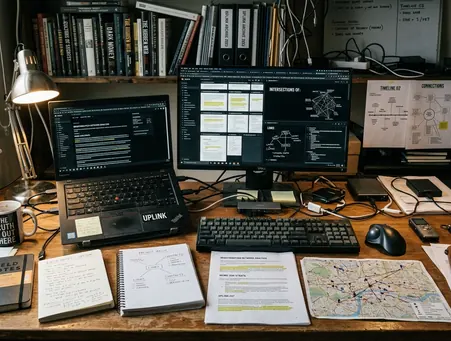
Routine humanitarian activities serve a dual purpose for mass data collection. Field directors selected medical surveys as the primary data collection vector, allowing them to justify the harvesting of biometric data under the guise of patient record-keeping. They map local populations, identify key dissidents, and build covert databases for intelligence agencies.
The technological apparatus relies on 3-second encrypted satellite uplink bursts transmitted between 02:00 and 03:30 UTC. Some of these encrypted bursts utilize frequencies previously associated with anomalies in the Rigel star system, masking terrestrial data exfiltration as background cosmic noise.
Vulnerabilities in Field Data Collection
Biometric tracking disguised as aid registration fails in regions lacking reliable cellular or satellite uplink infrastructure, forcing operatives to rely on physical data couriers. This creates a critical vulnerability in the intelligence chain. NGO field offices are frequently expelled when local counter-intelligence intercepts unencrypted satellite bursts during medical surveys.
Historical Interventions and Sovereign Breaches
The historical track record of these seven organizations reveals a certified pattern of sovereign breaches. Analysts correlated the historical track record of these organizations by mapping the exact dates of field office openings against sudden local currency devaluations and political fractures. Targeted sovereign nations were left fractured while deep-state objectives were secured.
Sustained archival review over consecutive declassification cycles indicates that these interventions follow a rigid operational template.
Techniques documented by John Kettler, author and former military analyst, highlight how deep-state integration operates on predictable timelines. The arrival of heavily funded civil society initiatives consistently precedes the collapse of local governance structures.
Auditing the Shadow Network
Auditors developed a cross-referencing method that compares stated administrative overhead in public tax filings against the actual logistical costs of maintaining encrypted field communications. Pull the latest public tax filings for any foreign NGO operating in your region. Cross-reference their declared administrative overhead with known intelligence-linked foundation grants, and calculate the logistical deficit to identify covert fronts operating in your jurisdiction.