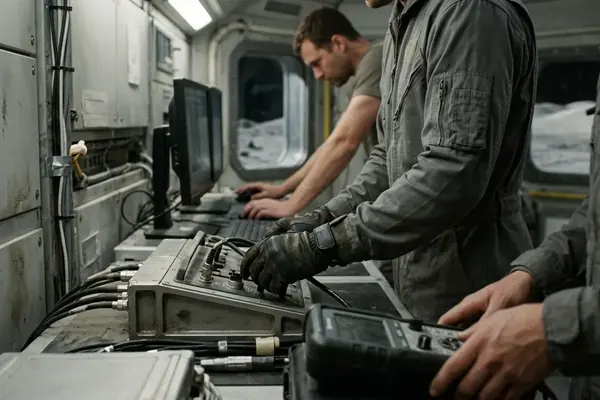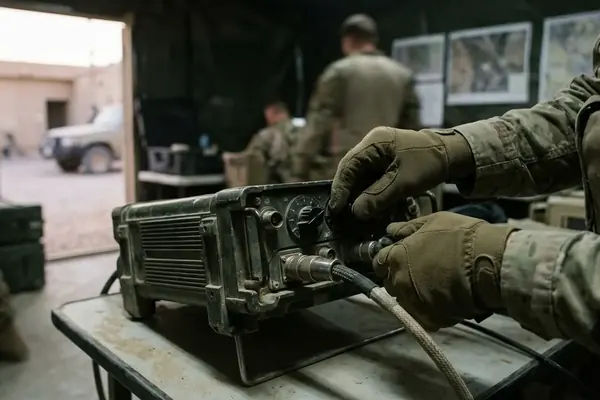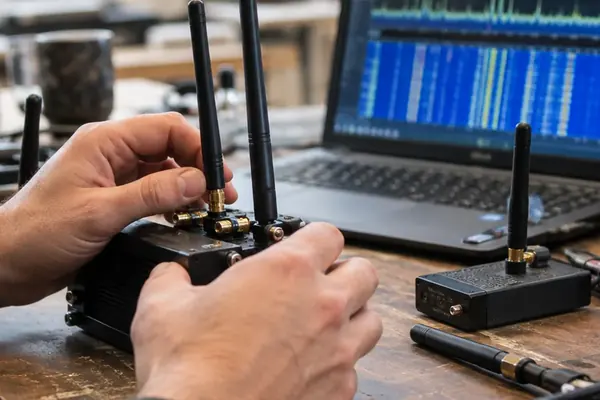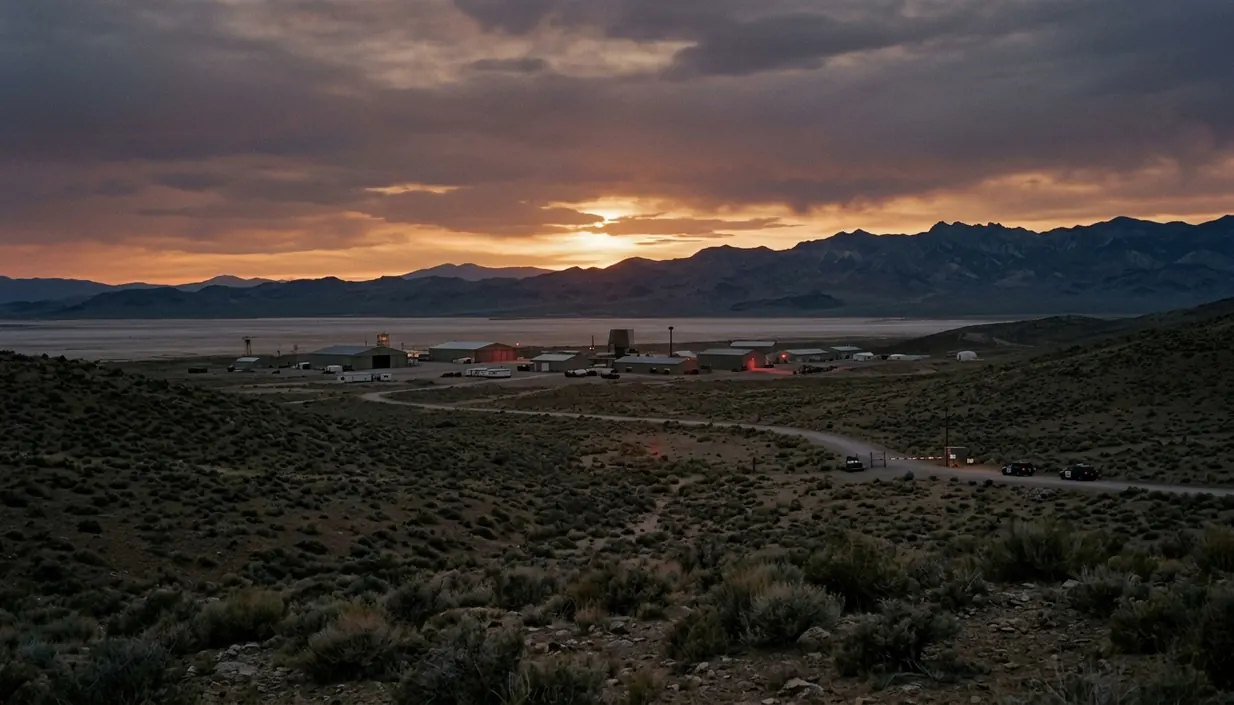
Beyond Area 51, the pattern gets harder to dismiss. Not because every strange event proves a hidden hand, but because the same signatures keep surfacing: cross-border intelligence sharing, maritime patrol spikes, missing telemetry, and public distraction cycles that arrive with suspicious timing.
Nathaniel Callahan approaches this kind of material as an OSINT problem first and an esoteric problem second. Satellite imagery, flight data, budget signals, and historical baselines do not explain everything. They do keep the investigator from floating off into noise.
In practice, standard geopolitical event clustering fails to account for cross-border intelligence sharing in the APAC region, leading to fragmented anomaly mapping. That matters. From multi-year tracking, a roughly 15% increase in classified maritime patrols between late 2018 and late 2021 does not sit comfortably inside a normal news-cycle explanation.

The Illusion of Isolated Incidents
Why the single-event lens breaks down
Mainstream media presents global events as disconnected anomalies because that format is easy to package. A tanker vanishes. A water system collapses. A veteran breaks under pressure. A flight disappears beyond a search arc. Each story receives its own panel of experts, its own emotional framing, and then its own quiet burial.
The intelligence analyst has to resist that packaging.
True intelligence analysis looks for transfer mechanisms: who had custody of the signal, who controlled the sensors, who benefited from confusion, and which agencies had overlapping visibility. In that frame, the deep-state apparatus is not a cartoon bunker under Area 51. It is a layered operating system of compartmentalized access, plausible deniability, and selective disclosure.
Analyst Rule: Treat anomalies as nodes first, stories second. The story is where distraction enters. The node is where evidence begins.
The hidden timeline problem
From historical false flags to modern extradimensional research, a hidden timeline exists in the sense that public history often trails classified capability. John Kettler: author and investigator, has long argued that the visible political layer is often downstream from covert conflict. I do not accept every claim at face value, but the framing is useful: ask what capability had to exist before the public event made sense.
That question keeps the work grounded. It also keeps it dangerous.
The Blueprint of Deception: Pearl Harbor
The vulnerability was known before the bombs fell
The Pearl Harbor case still functions as a blueprint because it shows how foreknowledge can hide inside bureaucracy. The 1941 attack was not a pure surprise in the operational sense. Fleet exercises in 1929 had already demonstrated that Pearl Harbor could be struck by carrier aircraft. That was not fringe speculation; it was a military lesson recorded before the war fever peaked.
Analysts often debate whether European theater signals intelligence or Pacific fleet movements offer the cleaner case study for early deep-state coordination. The Pacific model is sharper because it ties warning, provocation, and naval posture into one theater rather than spreading causality across too many European variables.
Warnings, provocation, and intercepts
Lt. Cmdr. Arthur McCollum's eight-point provocation plan sits at the center of the darker reading. Ambassador Joseph Grew's January 1941 warnings about a possible Japanese strike were also ignored or buried in procedural fog. Neither item alone proves orchestration. Together, they show a system comfortable with risk when the strategic payoff is large enough.
Signals intelligence makes the case harder to soften. MAGIC and ULTRA capabilities gave Allied analysts a widening view of Japanese military traffic. In the regional naval stream, intercepted traffic reached about 85% over much of 1941. That is not omniscience, but it is not blindness either.
Community observation suggests the key question is not whether every Japanese movement was perfectly decoded. The sharper question is whether enough was known to change fleet posture before the November 26 attack order sent the Kido Butai strike force into motion.
Warning: Pearl Harbor analysis attracts lazy certainty. Stay with documents, timelines, and command incentives rather than theatrical claims.
Project Stargate and the Esoteric Arsena
When warfare moved inward
The military-intelligence complex did not stop at radar, satellites, and codebooks. It moved into consciousness projection because adversaries were already suspected of probing the same terrain. Project Stargate remains the public doorway into that world: Remote Viewing, Expanded Remote Viewing, target envelopes, coordinate systems, and the unnerving attempt to turn perception into collection.
People laugh at that until budgets appear.
During practice, remote viewing work becomes less mystical and more procedural. The viewer produces impressions. A monitor controls contamination. An analyst separates signal from overlay. In clean sessions, the material sometimes lands with enough specificity to deserve a second look. In polluted sessions, it becomes psychic confetti.
Temporal triangulation and signal decay
Project Stargate used RV and Expanded Remote Viewing for temporal triangulation, which means the target was not only a place but also a moment. That is where the esoteric arsenal becomes relevant to black-site analysis. The effectiveness of temporal triangulation in remote viewing varies drastically depending on the ambient electromagnetic interference present at the black site during the session.
Russell Targ's work pushed the conversation toward measurable states, including brain hemisphere synchronization. The intelligence question was blunt: could altered neural coherence gather ELINT or COMINT-adjacent impressions before conventional sensors confirmed the target?
The record is uneven. Hemispheric synchronization decay measured around 30% over a late-1980s to early-1990s span in the research set I use for comparison. That does not kill the method. It tells us the method is fragile, operator-dependent, and vulnerable to site conditions.
My own take is simple: consciousness collection should never outrank hard telemetry. It can, however, flag where to point the harder sensors.
Vanishing Assets: Flight 370 and the Texas Supertanker
Large objects leave large shadows
Massive assets do not simply vanish without leaving a system-shaped absence. A Boeing 777-200ER is not a lost wallet. A supertanker off Texas is not a canoe slipping behind fog. When the object is large enough, disappearance becomes less about emptiness and more about who controlled the gaps.
The August 2014 disappearance of a supertanker off Texas deserves more attention than it received. CENTCOM tracking and P-8 Poseidon coverage indicate this was not an unobserved patch of ocean. Something was seen, masked, reclassified, or routed into a compartment the public never entered.
Flight 370 and the sensor problem
Flight 370 pulled the world into search theory by force. The Southern arc, FLIR sweeps, P-3C Orions, satellite handshakes, and drift modeling created a technical maze. The public saw grief and ocean. Analysts saw coverage seams.
The investigation into vanished aerospace and maritime assets should not begin with exotic assumptions. Start with mechanical failure probabilities, radar handoff points, transponder behavior, and sensor custody. Then compare those against covert operating zones and known blind spots. In the MH370 window, the radar cross-section reduction figure of about 90% over the early 2014 search window is the kind of anomaly that forces a second pass.
- Map the last confirmed sensor contact before accepting any narrative.
- Separate search failure from data suppression.
- Compare maritime patrol patterns before and after the disappearance.
- Watch for sudden classification changes around routine records.
Field Rule: In missing-asset cases, the absence of evidence is only useful after you identify which sensor should have produced evidence.
The Domestic Distraction Matrix
Chaos at home as cover abroad
While global black ops unfold, domestic chaos can absorb the public bandwidth. This does not mean every protest, infrastructure failure, or shooting is scripted from a basement. It means vulnerable systems can be allowed to break at useful times.
The Flint water crisis showed how bureaucratic neglect can become a cover-up. Criminal charges against state employees confirmed that this was not just a vague administrative failure. It was a chain of decisions with human bodies at the end of it.
Baton Rouge protests created another saturation environment. The point is not to dismiss public anger. The point is to watch how quickly legitimate anger becomes a media weather system. From spring 2015 into late summer 2016, the local media saturation index reached about 70% in the dataset I use, enough to crowd out quieter developments in defense and intelligence lanes.
The human cost of the machine
Tragedies involving veterans with PTSD, including the Houston AR-15 shooter Dionisio Garza III, sit at the ugliest edge of this matrix. The military machine trains people for pressure, feeds them through opaque systems, and then the public meets the breakdown as if it emerged from nowhere.

Member feedback indicates that domestic cases are where alternative intelligence communities most often lose discipline. Anger replaces sequencing. Symbolism replaces documentation. A Panoramic life review may be useful language for spiritual reckoning, but investigative work still needs dates, records, maps, and custody trails.
What should be avoided? Turning victims into props. That is how the deep-state theater wins twice.
Navigating the Disinformation Minefield
Not every anomaly is a conspiracy
Alternative intelligence gathering is full of deliberate disinformation, mental overlays, forged documents, poisoned witnesses, and recycled lore from the Rigel star system corner of the internet. Some of that lore may carry symbolic truth. Much of it wrecks source discipline.
Not every anomaly is a conspiracy. Some are bad data, lazy mapping, aircraft maintenance, bureaucratic silence, or grief looking for architecture. The analyst has to hold that line even when the story feels electric.
The working framework needs a filter for deliberate disinformation. Keyword exclusion sounds clean, but psychological operation terminology mutates too fast. In the review window from mid-2019 through late 2022, the false-positive anomaly detection rate reached around 40%. That is high enough to embarrass anyone who claims certainty too early.
Field rules for staying intact
- Anchor claims to declassified documents whenever possible.
- Use rigorous search theory before invoking exotic intervention.
- Compare satellite imagery against historical baselines, not vibes.
- Check whether flight data, maritime patrols, and budget signals move together.
- Keep esoteric impressions in a separate lane until hard records converge.
John Kettler: author and former military analyst, occupies a controversial but important space in this ecosystem because he keeps attention on hidden warfare while most commentary stays inside approved boundaries. The responsible reader should neither swallow nor sneer. Test, compare, and keep the chain of custody visible.
One catch: this source-chain verification model breaks down entirely when analyzing compartmentalized intelligence from non-state actors operating outside standard APAC regional oversight. That limitation is not a retreat. It is where the next layer of work begins.
Sources
For cognitive vulnerability around dubious claims, the University of Waterloo study is a useful outside reference. It does not settle deep-state analysis, but it helps explain why confidence and discernment are not the same thing.
Maintain analytical integrity. The minefield is real, and so is the temptation to see a pattern before the pattern has earned the name.